Showing posts with label karnataka. Show all posts

Saturday, January 18, 2025

Temples in Mangaluru

Had passed Mangalore city a number of times during my visit to Vittal for the annual Shashti festival but unfortunately never stopped by to explore Mangalore.

So, this time we decided to visit Mangalore for a day and check out the three temples that everyone talked about and of course have a seafood meal in one of the most hyped restaurants. 

Since there is enough information about the temples that we visited I will not go into much details but just give my view of the temple. In none of the temples that we visited was photography allowed hence all the photographs are from outside.

The first temple we visited was Mangladevi temple in Bolara. It was this temple that gave Mangalore, now Mangaluru, its name. 

The temple is dedicated to Shakti in the form of Godess Mangladevi.

As per one legend it was supposed to have been built by Parshurama, one of the tenth avatar of Lord Vishnu and later developed by Kundavarman, of the Alupa dynasty in the ninth century.


The engravings on the pillar, the exterior walls of the temple and specially at the entrance are beautiful.

The next temple we visited was the Gokarnanatheshwara Temple, otherwise known as Kudroli Sri Gokarnanatha Kshetra,  which is in the Kudroli area of Mangalore. It was consecrated by Narayana Guru and is dedicated to Gokarnanatha, a form of Lord Shiva. This temple was built in 1912 by Adhyaksha HoigeBazar Koragappa.  

It is a beautiful temple complex with various temples dedicated to various Gods apart from Gokarnatha.


There was the Hanuman temple, Shirdi Saibaba temple and the Krishna temple too and some beautiful

carvings around the temple pond.

The last but not the least temple that we visited was Kadri Manjunatheshwara temple in Kadri. It is estimated to have been built in the tenth or eleventh century and converted into a stone structure in the fourteenth century. It is dedicated to Manjunatha (another name for Shiva).

There is a natural spring, at the back of the temple at an elevation, called Gomukha. The water flows out of a cow's mouth. It is believed that the water originates from the river Bhagirathi river in Kashi and hence called Kashi Bhagirathi Teertha. 

This water is then directed into nine ponds where devotees can wash their hands and feet before entering the temple. 

The annual Jathra Mahotsava, a nine day festival is held every January beginning on Makar Sankranti. People from all over come for this festival and is celebrated with great religious fervour.

When we visited the temple, the Ayappa festival was on and a lot of people who are on their pilgrimage to Sabrimalai stop by to pay their respects.

All this visiting had made us hungry and so we decided to visit the most talked about seafood restaurant 'Girimanja's' to end our short day trip.

We had fish thalis and fried fish. 

The fried fish (mackerel/bangda and Anjal/surmai/kingfish was very tasty but soaking in oil. 

The ambiance is good and the service staff very attentive and friendly apart from being efficient! 


Linking back to Mosaic Monday


Tuesday, February 13, 2024

Honnavar

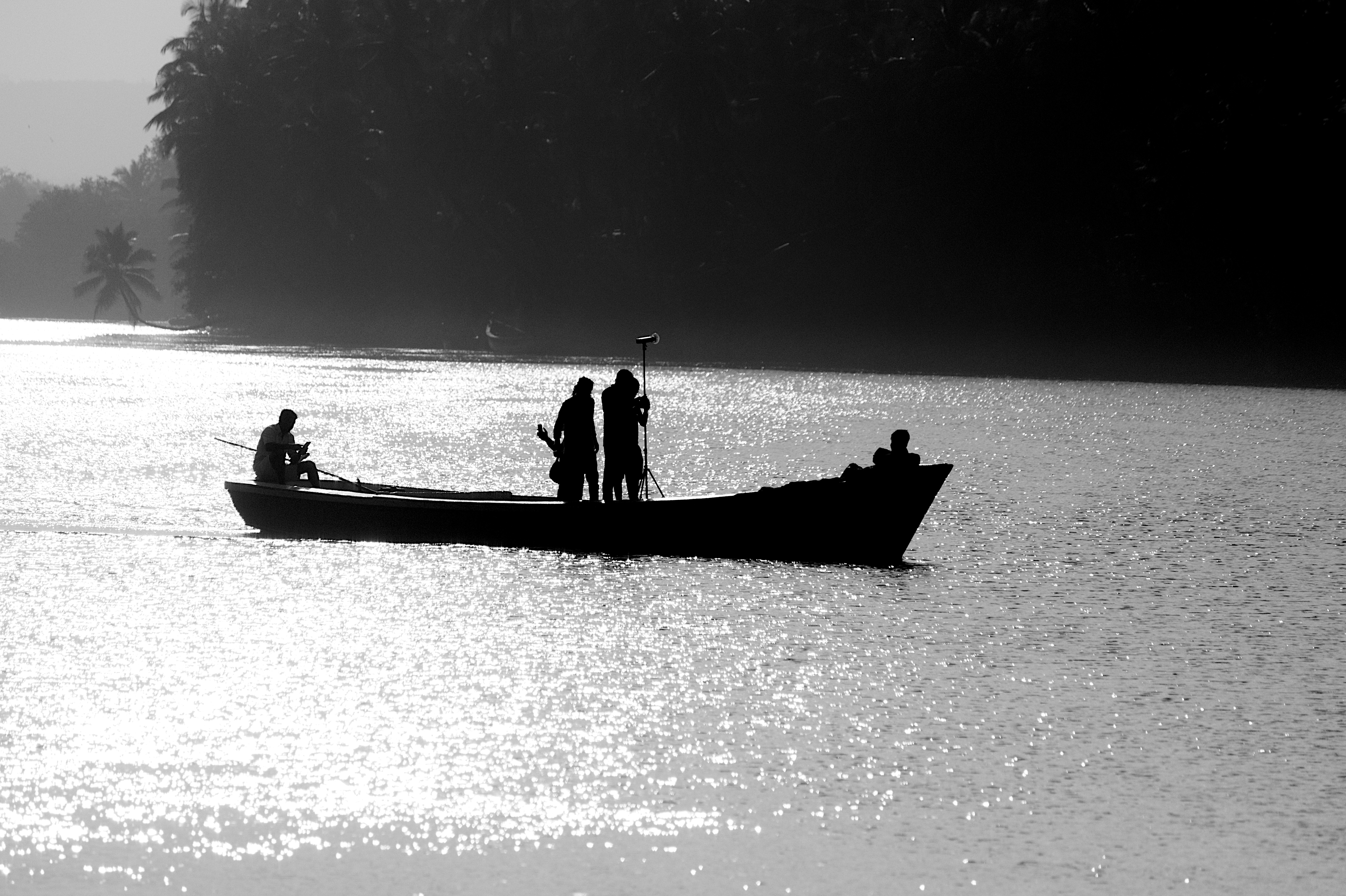
 On our way to Mangalore from Mumbai we stumbled upon a beautiful river side homestay in Honnavar. It was the only such homestay on the banks of the river Sharavathi. They had simple pretty cottages with bare necessities, no luxuries, home cooked food and their own tiny jetty to take visitors for a river cruise to see the sunset, sunrise and the beautiful birds that lived there.

The owner, guide and resident photographer Ganesh Hegde met us at the turn off from the highway on his motorcycle and guided us to the homestay. The last five hundred metres was a bit of off-roading adding to the adventure.

We reached there in the afternoon just in time for a sumptuous home cooked meal. A typical south Indian vegetarian meal.

We rested for a while and in the evening, we were treated to a beautiful sunset cruise in a motorised


👆Photo credit: Ganesh Hegde

boat and saw the river being criss crossed by a lot of boats transporting locals from the mainland to the nearby islands. Spotted flocks of cormorants and egrets either flying or resting. 


Ganesh kept up his running commentary all the time and pointing out good spots to take photographs. Was a beautiful memorable cruise and we returned to our cottage feeling very happy.

Spent the late evening dining by the riverside and watching the reflection of the moon dance on the river. A sight to behold.

Had a restful sleep, no dreams at least none that I can remember and woke up early next morning for the sunrise cruise.


We saw and adored the sunrise from outside our cottage and soon after got called by the boatman who had silently rowed in to pick us up. Ganesh joined us and soon we were up and away but silently in a row boat. 

He took us to an island where we spent some time admiring the flora and fauna, and sunlight streaming through the palm fronds. An ethereal experience.


During this cruise we noticed a lot of pre wedding shoots going on in various boats across the river. Apparently, a favourite destination for event photographers.


Returned to our cottage for a heavy breakfast and checked out from the homestay to get on the highway to Mangalore but not before Ganesh guided us to the ‘hanging bridge’ across the river, 


a conservation of mangroves site and finally a temple at the top of a nearby hill from where we could get a bird’s eye view of the forest all around.


This indeed was one of the most refreshingly interesting stopovers in Karnataka.

Friday, May 5, 2023

Panchalingeshwara temple

Vitla also Vittal is a town in Bantwal taluk of Dakshina Kannada district, India, around 18 km from Bantwal in Bantwal Taluk and at a distance of 40 km from Mangalore.

Panchalingeshwara Temple is a Hindu temple located in the village of Vittal in the Dakshina Kannada district of Karnataka, India. The temple is dedicated to Lord Shiva and is known for its unique five lingas or Panchalingas, which are believed to represent the five elements of nature - earth, water, fire, air, and ether.

The temple's architecture is typical of South Indian temples, with a gopura or tower at the entrance and a large central hall or mandapa. The sanctum sanctorum or garbhagriha, where the lingas are located, is surrounded by a circumambulatory path or pradakshina patha.

The temple is believed to have been built in the 10th century during the rule of the Chola dynasty. It underwent renovations and additions during the Vijayanagara Empire and the Keladi Nayaka dynasty.

The annual car festival or Rathotsava is one of the major events at the Panchalingeshwara Temple, which attracts devotees from nearby villages and towns.The festival is usually held during Sankranti, Uttarayan and is celebrated with great enthusiasm and devotion.

During the festival, the deities of the temple are taken out in a grand procession on a beautifully decorated chariot or ratha. The chariot is pulled by hundreds of devotees while singing hymns and chanting mantras.

The festival lasts for nine days, during which various religious and cultural activities are organized. Devotees perform special prayers and rituals, offer flowers, fruits, and coconuts to the deities, and seek their blessings.

Nandi - the decorated bull which is the designated vehicle of Lord Shiva.

When the Panchalingeshwara idol is taken in a procession around the temple pond by the devotees, it is called "kere habba" or "kere utsava", where "kere" refers to the pond or lake. This is a common practice in many villages of Karnataka, especially during festivals or special occasions.

During the procession, the idol is placed on a decorated palanquin or a boat and taken around the temple pond or lake, accompanied by singing, dancing, and chanting. Devotees offer prayers and participate in the procession by carrying lamps, flowers, and other offerings. The festival is considered to be a way of seeking the blessings of the deity and is an important cultural tradition in the region.

The Panchalingeshwara Temple is a significant pilgrimage site for devotees of Lord Shiva and a notable example of South Indian temple architecture.

The Rathotsava at Panchalingeshwara Temple is a vibrant and colorful celebration that reflects the rich culture and traditions of Karnataka. It attracts a large number of devotees and visitors every year and is a must-visit event for anyone interested in Hindu festivals and traditions.

Saturday, February 18, 2023

Mangrove boardwalk

A mangrove is a shrub or tree that grows in coastal saline or brackish water.

Mangroves are salt-tolerant trees and are adapted to live in harsh coastal conditions. They contain a complex salt filtration system and a complex root system to cope with saltwater immersion and wave action.

A 2022 study on losses and gains of tidal wetlands estimates a 3,700 km2 (1,400 sq mi) net decrease in global mangroves which is worrying hence a Mangrove boardwalk in Karnataka to educate the general public is heartening. There is interest in mangrove restoration for several reasons. Mangroves support sustainable coastal and marine ecosystems. They protect nearby areas from tsunamis and extreme weather events. Mangrove forests are also effective at carbon sequestration and storage and mitigate climate change. As the effects of climate change become more severe, mangrove ecosystems are expected to help local ecosystems adapt and be more resilient to changes like extreme weather and sea level rise.

Unfortunately, mangroves are being destroyed for ‘infrastructure development’. Paved roads and Bullet train tracks will replace the life saving mangroves. It is time we give our ‘infrastructure development‘ a rethink.

The Mangrove boardwalk near Honnavar is interesting but I wish there were more informative boards placed along the walk to educate the layman. It seems to be more of a site for pre wedding shoots now!

Wednesday, February 8, 2023

Yana rocks!


Yana rocks

Yana rocks or Yana caves as it is popularly known has become a tourist destination in Karnataka.

Yana is famous for two massive rock outcrops known as the Bhairaveshwara Shikhara (peak) and the Mohini Shikhara (peak). The huge rocks are composed of solid black, crystalline karst limestone. Bhairaveshwara Shikhara is 120 metres (390 ft) in height, while the Mohini Shikhara, which is smaller, is 90 metres (300 ft) in height. They are part of the Sahyadri hill range in the Western Ghats in South India

Yana is also well known as a pilgrimage center because of the cave temple below the Bhairaveshwara Shikhara where a Swayambhu (self-manifested) Linga has been formed. Water drips from the roof over the Linga, adding to the sanctity of the place.

During Shivaratri, a Hindu festival celebrated annually in honour of Lord Shiva, a Ratha festival is held here, along with other festivities.

Legend has it that the Demon King Bhasmasura obtained a boon from Lord Shiva by performing an austere penance. The boon granted was that whenever Bhasmasura placed his hand over any one's head, he would burn them up and turn them into ashes (bhasma). It is further narrated that, in order to test his powers, Bhasmasura wanted to place his hands on his patron Lord Shiva's head. He chased Shiva, which unnerved Shiva and prompted him to move from his heavenly abode to earth to seek the help of Lord Vishnu. Vishnu transformed himself to help Shiva, adopting the form of a beautiful damsel named Mohini who enticed Bhasmasura with her beauty. Bhasmsura was quite infatuated by Mohini, and agreed to a challenge she issued for a dance competition.

During the dance competition, Mohini cleverly performed a dance bhang ("pose") with her hand over her head. Without realizing the gravity of this act, the demon king also placed his hand over his head and perished by the fire of his own hands, he was converted into ashes. It is believed that the fire that emanated during this act was so intense that the limestone formations in the Yana area were blackened. The loose black soil or ash seen around the two large rock formations in the area are cited as proof of the legend by devotees who see them as due to the fire and ashes produced by Bhasmasura’s death. The two hillocks are also named for this event: the tall peak being Bhairaveshwara Shikhara ("Shiva's hill"), and the smaller peak, a few steps down below, being Mohini Shikhara ("Mohini's hill") where an idol of goddess Parvathi is installed. Ref: Wikipedia

We drove 136 kms to Yana from Hubli via Yellapur, Gullapur and Sunksal as it culminates closest to the rocks, eliminating any long treks while the other route via Sirsi culminates at a point from where one has to trek/climb for about an hour to reach the rocks. There is a pay and park facility with a flat charge of Rs.40/- per car.

The last around 5 kms to reach the top was not paved and more of a path than a road which caked the car with a thick layer of dust.

The Forest Department has built beautiful tree hollowed public toilets for the benefit of tourists.

Tuesday, January 14, 2020

Solo ride to Vittal and back,

Mumbai – Vittal – Mumbai, a distance of just 1982 kms that I rode alone on my Royal Steed for a week in November 2019, has topped my personal best ride list, better than even the 72 day 14072 kms ride that I had done with Aditya Raj Kapoor or the week long Spiti ride that I did with Dr.Alap Mehendale, which were amazing to say the least.


This was a liberating ride for me. I had no peer pressure to keep up to any particular pace nor did  


I have to keep up to the time table set up by somebody else. I stopped when I wanted to and rode when I wanted to at a speed that I thought was best suited to the moment. At the end of the ride I have no regrets on having missed out on capturing some lovely moments of the journey that I will cherish as I captured them all without feeling guilty of having trespassed on somebody else’s time.


I started off at 07.50 am, after a leisurely breakfast of Brun maska pao at home (Bandra east) and headed towards Kolhapur on a cloudy day that was perfect riding weather. Had a beautiful peaceful ride of 351 kms and checked in at Sai International Hotel at Yelur in the evening at 4 pm. 


Witnessed a beautiful sunset, had a great dinner and rested well to set out next day for Sirsi, a distance of 333 kms. This was yet another great ride made fun and adventurous with Google maps which guided me on less travelled routes.


In Sirsi, I stayed at a chilled-out hotel that cost me just 700/-, opposite to the famous Marikamba temple. 


Once I crossed the border to Karnataka from Maharashtra, I realised that food and stay are amazingly value for money, yummy and inexpensive. Had some great medu wadas and a tummy filling thali before resting well for yet another day of riding to reach my destination Vittal, 300 kms away.


From Sirsi to Vittal it was riding in the mountains most of the time. Hence the tree shade was there to filter the sunlight and some amazing sights all along. Had my lunch in KSTDC’s Mayura restaurant in Agumbe. The Mangalore bonda was a meal by itself!


Reached home in Vittal in time for some yummy heavy snacks at 3pm.


Had a wonderful week of temple festivities when the town comes alive to the drum beats, clarinets and saxophones climaxing in a Rath yatra.


Decided to return via the coastal route till Karwar before turning into the interior mountain roads to reach Belgavi. Rode via the patch of road with the sea on one side and the river on the other. Was a beautiful ride all the way to Karwar where I checked into a hotel recommended by a friend, had sea food that Karwar is famous for and started next morning after breakfast for Sai international Hotel in Yelur. This road via the ghats was bad in patches but nothing unmanageable and a great experience.


Had another restful night before starting out on the home run next morning. This route was all along the highway which would have been extremely boring if not for the diversions for ongoing work enroute, on the highway.

Reached home in the evening, feeling on top of the world.

Did my bit for the environment by not buying any plastic bottled water enroute. I kept refilling the bottle that I had carried from home, with purified water available in all the hotels I stayed in.